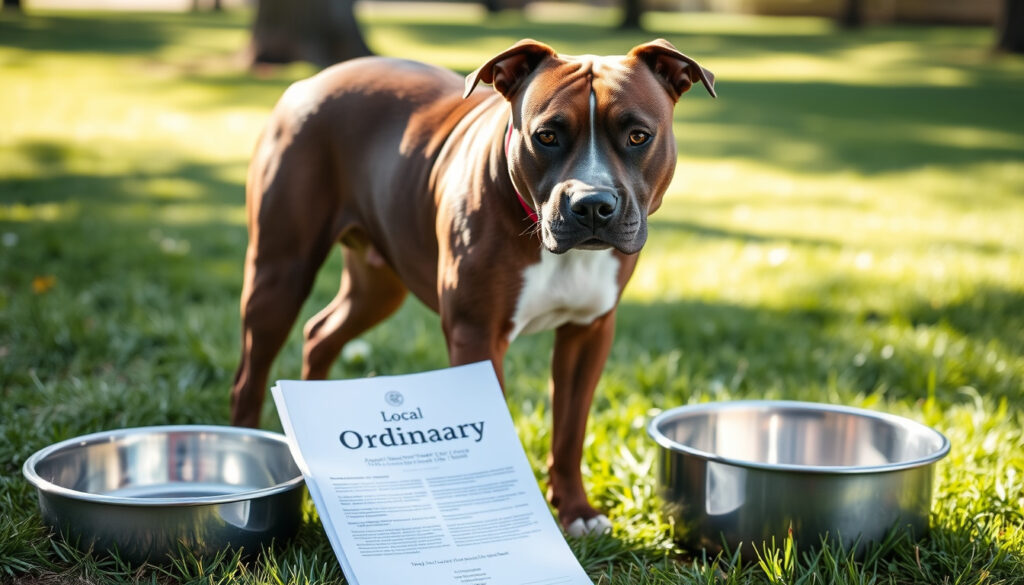
American Pit Bull Terrier Guide: Temperament, Health Facts & Laws
There’s a good chance you’ve heard strong opinions about the American Pit Bull Terrier before you met one. Few dog breeds inspire such divided reactions—some see a loyal family companion, others a danger. This guide uses data from temperament tests, breed registries, and peer-reviewed studies to separate fact from fear, giving you the evidence to decide for yourself.
Height (male): 18–21 inches (45–53 cm) ·
Weight (male): 35–60 pounds (15–27 kg) ·
Lifespan: 12–16 years ·
Temperament: Loyal, athletic, intelligent, people-oriented ·
Legal status: Banned or restricted in some countries and U.S. cities
Quick snapshot
- Recognized by the United Kennel Club (UKC) as a distinct breed (Wikipedia)
- ATTS pass rate of 87.6% (above average for all breeds) (Best Friends Animal Society)
- No lock-jaw mechanism exists in any dog breed (Humane Society for Tacoma and Pierce County)
- UKC breed standard says APBT is “eager to please” and “excellent family companions” (United Kennel Club)
- Exact prevalence of dog bite incidents by breed due to widespread misidentification in police and media reports (Humane Society for Tacoma and Pierce County)
- Whether breed-specific legislation (BSL) reduces serious dog bites—evidence remains mixed (San Francisco SPCA)
- Incidence of genetic health problems varies widely by bloodline and is not tracked centrally (Humane Society for Tacoma and Pierce County)
- 1898: UKC first recognizes the American Pit Bull Terrier (United Kennel Club)
- 1991: UK bans pit bull type dogs under the Dangerous Dogs Act (United Kennel Club)
- 2020: Denver lifts its 30-year breed ban (United Kennel Club)
- 2010s–2020s: Growing movement to repeal BSL globally (United Kennel Club)
- More cities shifting to breed-neutral dangerous dog laws that focus on individual behavior (Best Friends Animal Society)
- Increased use of DNA testing in shelters to reduce mislabeling of pit bull mixes (Best Friends Animal Society)
- Continued research into genetic health markers for common conditions (Best Friends Animal Society)
Eight key facts define the American Pit Bull Terrier at a glance:
| Attribute | Value |
|---|---|
| Height | 18–21 inches |
| Weight | 35–60 pounds |
| Lifespan | 12–16 years |
| Coat type | Short, smooth |
| Colors | Brindle, fawn, blue, black, white, red, and combinations |
| Temperament test pass rate | 87.6% (ATTS) |
| Recognized by | UKC (not AKC) |
| Affection level | Very high |
Is American Pit Bull Terrier a good family dog?
Temperament and children
- The UKC breed standard describes the APBT as “eager to please” and notes the breed “makes an excellent family companion” with “a long-standing reputation for its love of children” (United Kennel Club (official breed registry)).
- American Temperament Test Society data shows the APBT passes at a rate of 87.6%, higher than golden retrievers (85.6%) and border collies (82.4%) (Best Friends Animal Society (rescue and advocacy nonprofit)).
- The breed is people-oriented and can be prone to separation anxiety if left alone for long periods (Hill’s Pet Nutrition (veterinary nutrition company)).
Exercise and training requirements
- APBTs need at least 60 minutes of vigorous exercise daily; without it, they may develop destructive behaviors (Humane Society for Tacoma and Pierce County (animal welfare organization)).
- Consistent positive reinforcement training from puppyhood significantly reduces behavioral issues (United Kennel Club).
- Supervision around young children is recommended for any dog breed, including this one.
Comparison with other high-attention breeds
- Pit bull terriers rank in top 10 high-attention breeds due to their human-centered attachment.
- Breeds like Border Collie, Labrador Retriever, and Australian Shepherd are similarly needful.
- Lack of attention can lead to separation anxiety and destructive behavior (Best Friends Animal Society).
A family that cannot commit to daily exercise and training will face a restless, potentially destructive dog—regardless of breed. The APBT’s high energy and intelligence are assets only when properly directed.
Bottom line: The American Pit Bull Terrier is a people-loving breed that scores above average on temperament tests. Families must provide structured exercise and training; those who do often find a devoted, gentle companion.
Is a Pitbull Terrier considered an aggressive breed?
Temperament test data
- The ATTS pass rate of 87.6% for APBTs is above the general breed average (83.4%) (Best Friends Animal Society).
- The AVMA states that bite risk is determined by individual history, behavior, size, number of dogs involved, and vulnerability of the person bitten—not breed alone (Humane Society for Tacoma and Pierce County, citing AVMA).
- No peer-reviewed evidence supports the claim that pit bull-type dogs have a “lock-jaw” mechanism (Humane Society for Tacoma and Pierce County).
Bite statistics vs misidentification
- Many bites attributed to “pit bulls” come from mixed-breed or misidentified dogs; “pit bull” is an umbrella term covering several breeds and mixes (San Francisco SPCA (animal shelter and advocacy)).
- Breed-specific legislation (BSL) has not been shown to reduce bite rates in peer-reviewed studies (San Francisco SPCA).
- Aggression correlates more strongly with individual training, socialization, and owner behavior than with breed (Humane Society for Tacoma and Pierce County).
The data consistently points away from breed as a reliable predictor of aggression. Owner responsibility, supervision, and the dog’s individual history matter far more than the label “pit bull.”
The implication is clear: judging dogs by their breed label rather than their individual behavior leads to flawed conclusions about risk.
What are the downsides of pitbulls?
Health problems common in Pit Bulls
- Common issues include hip dysplasia, allergies, skin infections, and hypothyroidism (Hill’s Pet Nutrition).
- Obesity is a risk if overfed without adequate exercise (United Kennel Club).
- The UKC disqualifies dogs with albinism, merle, deafness, long coat, dwarfism, and screw tail—conditions that can require extra veterinary care (United Kennel Club).
Insurance and housing restrictions
- Many landlords and insurance companies exclude “pit bull type” dogs from coverage (Best Friends Animal Society).
- Owners in restricted areas may face fines, confiscation, or forced euthanasia (Humane Society for Tacoma and Pierce County).
- Breed bans exist in the UK (since 1991), New Zealand, parts of Canada, and several U.S. cities (e.g., Miami-Dade County) (San Francisco SPCA).
High exercise needs and destructiveness when bored
- Daily vigorous exercise is essential; underexercised dogs can develop destructive chewing, digging, or barking (Hill’s Pet Nutrition).
- Separation anxiety is common due to the breed’s high people-orientation (Best Friends Animal Society).
The same loyalty and energy that make APBTs wonderful companions also create challenges: high exercise demands, potential housing hurdles, and health management costs. Prospective owners must weigh these against the breed’s positives.
What this means is that the breed’s strengths also double as demands that not every owner can meet.
Is an American Pit Bull Terrier the same as a pitbull?
Breed definition vs umbrella term
- “Pit bull” is not a single breed; it’s an umbrella term that typically includes the American Pit Bull Terrier, American Staffordshire Terrier, and Staffordshire Bull Terrier (San Francisco SPCA).
- The American Pit Bull Terrier is the only breed recognized by the UKC with that exact name; the AKC does not recognize it (Best Friends Animal Society).
- Many shelter dogs labeled “pit bull” are mixed breeds with some bully breed ancestry (Humane Society for Tacoma and Pierce County).
American Pit Bull Terrier vs American Staffordshire Terrier
- The American Staffordshire Terrier is recognized by the AKC and is generally stockier, with a slightly heavier weight range (40–70 pounds) and different head proportions (Wikipedia).
- Both share a common ancestry, but breed standards differ in size, color allowances, and temperament emphasis (United Kennel Club).
Nine specifications from the UKC breed standard highlight the APBT’s distinctive build:
| Specification | UKC Standard |
|---|---|
| Size | Medium, muscular, well-proportioned |
| Weight (male) | 35–60 pounds |
| Height (male) | 18–21 inches |
| Coat | Short, smooth, close |
| Color | All colors except merle |
| Ears | May be cropped or natural (personal choice) |
| Tail | Short, natural; docking allowed in the U.S. |
| Disqualifications | Albinism, merle, deafness, long coat, dwarfism, screw tail |
| Temperament | Eager to please, enthusiastic, excellent family companion |
Because “pit bull” is a loose label, breed-specific laws often apply to any dog that looks the part—regardless of actual DNA. This makes accurate identification critical for both owners and policymakers.
The implication for owners: your dog’s official label matters less than its appearance in jurisdictions with BSL.
Why do pit bulls turn on owners?
Common triggers for aggression
- No peer-reviewed evidence shows that any breed “snaps” without warning; aggression typically has identifiable triggers such as untreated pain, fear, resource guarding, or poor socialization (Humane Society for Tacoma and Pierce County).
- The AVMA has stated that owner behaviors—such as chaining, neglect, and lack of supervision—increase bite risk across all breeds, not just pit bulls (Humane Society for Tacoma and Pierce County).
Owner responsibility and training
- Proper socialization, positive reinforcement training, and supervised interactions are key to preventing incidents (United Kennel Club).
- A 2014 study in the Journal of the American Veterinary Medical Association found that breed was a poor predictor of aggression—individual history and environment were far stronger (Humane Society for Tacoma and Pierce County).
Media myths vs reality
- High-profile attacks are often incorrectly attributed to “pit bulls” without DNA confirmation; misidentification rates in news reports exceed 50% in some analyses (San Francisco SPCA).
- The CDC discontinued breed-specific bite data collection in 1998 because of unreliable breed identification (Humane Society for Tacoma and Pierce County).
“The UKC breed standard says the APBT should never appear bulky or fine-boned and rangy—it combines strength and athleticism with grace and agility.”
— United Kennel Club (official breed registry)
“Pit bull terrier-like dogs passed temperament testing at a higher rate than many other breeds such as golden retrievers and border collies.”
— American Temperament Test Society, cited by Best Friends Animal Society
Is American Pit Bull Terrier illegal?
Countries and cities with breed bans
- The UK banned pit bull type dogs under the Dangerous Dogs Act in 1991 (San Francisco SPCA).
- Denver, Colorado, had a 30-year ban that was overturned in 2020; Miami-Dade County, Florida, still enforces a ban (Best Friends Animal Society).
- Other countries with bans include New Zealand, parts of Canada, and certain Australian states.
Consequences of ownership in restricted areas
- Penalties range from fines (hundreds of dollars) to forced euthanasia or confiscation (Humane Society for Tacoma and Pierce County).
- Some homeowners’ insurance policies exclude pit bull-type dogs, leaving owners uninsured in case of an incident (Best Friends Animal Society).
Legal alternatives
- Breed-neutral laws that focus on individual dog behavior are increasingly replacing BSL (San Francisco SPCA).
- Mixed-breed dogs with similar appearances may still fall under BSL in some jurisdictions.
Before adopting or moving, check local laws—not just city ordinances but also county and insurance policies. The legal landscape is shifting, but restrictions remain in many areas.
The pattern is clear: legal risk varies by location, and due diligence is the owner’s responsibility.
Pros and Cons of the American Pit Bull Terrier
Upsides
- Loyal and affectionate with family
- Above-average temperament test scores
- High trainability with positive reinforcement
- Low grooming maintenance (short coat)
- Strong, athletic build for active owners
Downsides
- High exercise needs (60+ minutes daily)
- Prone to separation anxiety and destructiveness when bored
- Common health issues: hip dysplasia, allergies, hypothyroidism
- Housing and insurance restrictions in many areas
- Legal bans in certain countries and cities
Timeline: Key dates in the breed’s history
- 19th century – Development of the breed from bulldog and terrier crosses in the United States.
- 1898 – United Kennel Club (UKC) first recognizes the “American Pit Bull Terrier” (United Kennel Club).
- 1910s–1930s – Breed used as U.S. military mascot and in advertising (e.g., the RCA Victor dog Nipper was part Pit Bull).
- 1976 – UKC briefly changes the breed’s name to “American Staffordshire Terrier” but later reverses it.
- 1991 – UK passes the Dangerous Dogs Act, banning pit bull type dogs.
- 2010s–2020s – Growing movement to repeal breed-specific legislation; Denver lifts ban in 2020.
Clarity: What we know and what remains uncertain
Confirmed facts
- The American Pit Bull Terrier is a distinct breed recognized by the UKC (United Kennel Club).
- ATTS data shows an 87.6% pass rate for the breed (Best Friends Animal Society).
- The breed requires substantial exercise and attention (Hill’s Pet Nutrition).
- Ban in the UK since 1991 is for pit bull type dogs broadly, including mixes (San Francisco SPCA).
- No lock-jaw mechanism exists in any dog breed (Humane Society for Tacoma and Pierce County).
What’s unclear
- Exact prevalence of dog bite incidents by breed due to misidentification in media and police reports (Humane Society for Tacoma and Pierce County).
- Whether breed-specific legislation reduces serious dog bites—evidence is mixed (San Francisco SPCA).
- Incidence of genetic health problems varies by bloodline and is not centrally tracked.
“Pit bulls are not an AKC-recognized breed; the UKC does recognize the American Pit Bull Terrier. The term pit bull is umbrella used by many organizations to refer to multiple breeds and mixes.”
— Best Friends Animal Society (rescue and advocacy nonprofit)
“According to the AVMA, it is the dog’s individual history, behavior, size, number of dogs involved, and the vulnerability of the person bitten that determine bite risk and injury severity—not breed alone.”
— Humane Society for Tacoma and Pierce County, citing the American Veterinary Medical Association
The evidence points to a clear conclusion: the American Pit Bull Terrier is not inherently dangerous, but it is a high-energy, people-oriented breed that demands committed owners. For families and individuals who can meet its exercise, training, and legal requirements, it can be a loyal and affectionate companion. For those in restricted areas or with limited time, the trade-offs may be too steep. The pattern across studies is consistent: individual dog behavior, not breed label, should guide decisions about temperament and risk.
Frequently asked questions
How much exercise does an American Pit Bull Terrier need?
At least 60 minutes of vigorous exercise daily, including walks, runs, and interactive play. Without it, the breed may develop destructive behaviors (Hill’s Pet Nutrition).
Are American Pit Bull Terriers good with other dogs?
They can be, but early socialization is crucial. The breed has a history of dog aggression in poorly socialized individuals. Supervised introductions and consistent training improve outcomes (United Kennel Club).
Do American Pit Bull Terriers shed a lot?
They shed moderately year-round with heavier seasonal shedding. Weekly brushing helps manage loose hair (Hill’s Pet Nutrition).
What is the difference between UKC and AKC recognition for this breed?
The UKC recognizes the American Pit Bull Terrier as a distinct breed and maintains its breed standard. The AKC does not recognize the APBT; it recognizes the American Staffordshire Terrier instead (Best Friends Animal Society).
Can American Pit Bull Terriers live in apartments?
Yes, if exercised adequately. A well-exercised APBT can adapt to apartment living, but separation anxiety and noise may be issues. Check lease restrictions first (Humane Society for Tacoma and Pierce County).
How long does it take to train an American Pit Bull Terrier?
Basic obedience can be achieved in 2–4 months with consistent positive reinforcement. Ongoing socialization and advanced training continue throughout life (United Kennel Club).
Are American Pit Bull Terriers healthy dogs?
They generally have a lifespan of 12–16 years, but common health issues include hip dysplasia, allergies, and hypothyroidism. Regular veterinary care and a healthy diet are important (Hill’s Pet Nutrition).
More related posts
 Find Words with Letters: Best Free Tools & Guides
 Cast of Knives Out – Full List of Actors and Roles
 How Many Books Is Considered a Library? Myths vs Facts
 Molly Gordon Movies and TV Shows – Full Filmography Guide
 Four Points by Sheraton Edmonton South – Location, Amenities, Rates & Reviews
 India vs South Africa Cricket: Head-to-Head & 2026 Updates
 Kentavious Caldwell-Pope Injury: Surgery, Rings & Career Stats
 Drake Certified Lover Boy: Meaning, Tracklist & Sales Story
