Cape Breton Highlands National Park: Trails, Safety & Cabot Trail
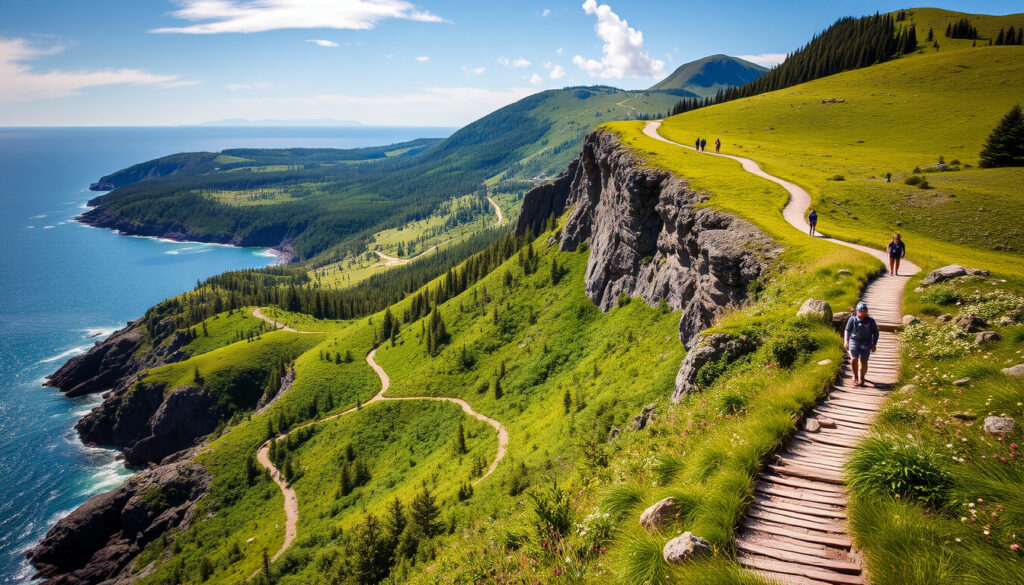
When the first mapmakers traced Nova Scotia’s northeastern coast, something stopped them: a jagged highland plateau that seems to belong to another country entirely. Cape Breton Highlands National Park is that kind of place—boreal forest meets ocean cliffs, and a 298 km loop road cuts through it all. Visitors come for the views, but they’re often surprised by how seriously the park takes your safety once you’re out there.
Hiking trails: 26 · Cabot Trail portion: One third · Visitor services season: May to October · Key feature: Skyline Trail · Wildlife: Black bears present
Quick snapshot
- Black bears confirmed in park (Parks Canada)
- Visitor services close late October (Parks Canada)
- Feeding wildlife is unlawful (Parks Canada)
- Bear encounter frequency statistics
- Precise drive times vary by stops
- Wildlife sighting frequency data
- Visitor services close late October (Parks Canada)
- Fall foliage peaks mid-October (Parks Canada)
- Coyote safety practices ongoing (Parks Canada)
- Plan bear-aware hiking habits (Parks Canada)
- Book summer/fall for full services (Parks Canada)
- Consider shoulder season quiet trails (Parks Canada)
These core details shape how you plan a visit to Cape Breton Highlands, from wildlife precautions to seasonal road access.
| Detail | Value |
|---|---|
| Location | Cape Breton Island, Nova Scotia |
| Key road | Cabot Trail (one third) |
| Trails | 26 including Skyline |
| Open | Year-round |
| Services | May to October |
Is Cape Breton Highlands National Park worth visiting?
There’s a reason this park consistently ranks among Canada’s most dramatic landscapes. The Cabot Trail—one third of which runs through the park—offers ocean vistas that travel bloggers call “stunning” and “unlike anything in the Maritimes.” The 26 hiking trails range from strolls to challenging climbs, with the Skyline Trail pulling the biggest crowds.
Scenic highlights
The Cabot Trail is a 298 km loop that hugs coastal cliffs and dips into boreal forest. According to Will Save For Travel travel blog, the road was named after John Cabot, who landed in the area in 1497. October visits benefit from fall foliage—travel writers at Explore With Lora travel guide note that the warm amber colors against grey ocean make the drive “worth every curve.”
Visitor experiences
Reviewers frequently mention the contrast between ocean and highland. CBIsland tourism site calls fall “the best time to visit this captivating island” for its foliage, weather, and “peaceful atmosphere.” The shoulder seasons draw fewer visitors—spring (April to early June) offers quieter trails with fewer cars on the Cabot Trail loop.
Comparison to other parks
If you’ve driven the Icefields Parkway or visited Banff, expect a different feel. Cape Breton trades glacier-carved peaks for wind-sculpted coastal cliffs. The scale is smaller, but the ocean-highland collision creates photo opportunities that feel genuinely distinct. What sets it apart is the Cabot Trail’s drivability—you can cover serious scenic ground without extensive planning.
The park’s peak season (June through October) means summer crowds. October visitors get foliage plus fewer people, but must accept cooler temperatures and the reality that visitor services shut down after late October.
The implication for visitors is clear: summer demands early starts to beat traffic on the single-lane Cabot Trail, while October rewards those willing to bundle up and navigate reduced services.
Are there bears in Cape Breton Highlands National Park?
Yes. The park’s official authority, Parks Canada, confirms that black bears, moose, and coyotes inhabit the area. This isn’t theoretical safety guidance—encounters happen, which is why the park maintains detailed protocols for visitors.
Bear presence
Black bears are “common” in Cape Breton, according to Parks Canada wildlife safety page. The agency states that feeding or enticing wildlife is unlawful and “puts you and the animals at risk.” Visitors must store food and garbage in vehicles or bear-proof cans—failure to do so can attract bears to campgrounds and trailheads.
Safety guidelines
Parks Canada recommends hiking in groups of four or more and keeping dogs leashed. Make noise on trails near streams, berries, or low-visibility sections to alert bears to your presence. The agency’s bear safety guide explicitly states that bear bells are not effective. Littering can harm wildlife and carries fines.
Deterrents
The park’s official stance on bear spray is nuanced: use it if a defensive encounter occurs and you’re trained to deploy it. Defensive attacks—which Parks Canada notes are generally less than two minutes in duration—call for calm speech and backing away. Predatory attacks, which the agency calls “rare,” require fighting back aggressively. Never run from a bear: U.S. National Park Service official guidance confirms that backing away slowly is the correct response.
Moose present a separate road hazard. Freewheeling Adventures cycling resource notes that moose sightings are rare but possible near roads at dawn and dusk. Unlike bears, moose are unpredictable and can charge without warning—keeping distance is equally important for a different reason.
The pattern across both wildlife types is consistent: distance and non-confrontational behavior prevent escalation in most encounters.
Do I need bear spray in Cape Breton?
The decision isn’t automatic, and experienced hikers disagree on it. Parks Canada doesn’t mandate carrying bear spray but doesn’t discourage it either. What the agency is clear about is technique: most bear encounters end without incident if visitors follow basic protocols.
Bear spray recommendations
Bear spray is legal in Canadian national parks and can be effective in defensive encounters. The key qualifier is “defensive”—meaning the bear sees you as a threat to itself or food, not as prey. For this scenario, Parks Canada notes that calm speech, backing away, and spray if needed represent the proper sequence. If you’ve never deployed bear spray, practice with an inert can before your trip.
Alternatives
Noise-making is the primary alternative. Talk or sing on trails, especially in areas with limited sightlines. Parks Canada specifically recommends against bear bells, calling them ineffective. The agency’s bear safety protocol lists group hiking, leash rules, and food storage as complementary measures that reduce encounter probability.
Park rules
The park operates under “Keep it wild, keep it safe” messaging. Parks Canada’s safety page emphasizes that human behavior directly impacts bear behavior. The agency is also developing best practices for coyote safety with behavior and ecology experts—coyote encounters require maintaining distance, backing away slowly, acting large, and making noise while identifying escape routes.
Wildfire risk spikes during hot, dry August and September conditions, occasionally forcing trail closures. Check park conditions before heading out—Nova Scotia Tourism identifies this seasonal hazard as a planning priority for late-summer visits.
The consequence for visitors who ignore fire-risk closures is steep: fines, endangering wildlife, and potential evacuation costs.
How long does it take to drive the Cabot Trail?
The full Cabot Trail loop measures 298 km. Drive times depend entirely on how many stops you make—a nonstop drive takes roughly 5-6 hours, but most visitors spread the loop over two to three days to include hikes and viewpoints.
Loop duration
Travel bloggers consistently understate the time needed. Will Save For Travel describes the Cabot Trail as “one of the best drives” in Canada but doesn’t specify that the park portion alone requires 2-3 hours without stops. Add the full loop and you could easily spend a full day just driving.
Stops along the way
The park section includes the Skyline Trail trailhead, multiple coastal overlooks, and Ingonish Beach. Outside the park, the Cabot Trail continues through communities like Chétican and Pleasant Bay. Each detour adds time but reveals different angles on the highland-ocean contrast that makes the route distinctive.
Best driving tips
The Cabot Trail is a loop, but the road quality varies—expect narrow sections, cliffs without guardrails, and curves that demand attention. Freewheeling Adventures notes that cyclists face additional risks from narrow shoulders. For drivers, the best advice is to start early, avoid the loop during fall peak weekends, and resist the urge to stop suddenly for photos.
If your schedule is tight, prioritize the park section between Ingonish and the Skyline Trail overlook—you’ll capture the most dramatic scenery in under three hours.
What this means for planning: the Cabot Trail rewards slow travel, and rushing it defeats the purpose of visiting one of Canada’s most scenic drives.
What is the best month to visit Cape Breton Highlands National Park?
The honest answer depends on what you want from the park. Summer (June through August) maximizes services and warm weather; fall (September through October) delivers the foliage spectacle; winter and spring trade accessibility for solitude.
Peak season pros
Summer visitors can swim at Ingonish Beach, kayak coastal sections, and rely on full visitor services. Explore With Lora identifies June through August as the “best time to visit Cape Breton” for warm weather and maximum activity options. The trade-off is crowds: the park’s limited road infrastructure means summer weekends see traffic jams on the Cabot Trail loop.
Avoid times
Late October through April means reduced services. Parks Canada notes that visitor services close in late October, and trails remain accessible but ungroomed. CBIsland claims fall is “undeniably the best time,” but this ignores wildfire risk closures that occasionally occur during hot, dry August-September conditions. Shoulder season visits reward those willing to trade convenience for quiet.
Activity-based timing
Fall foliage peaks vary by year and by area within the park. In 2023, peak color occurred around October 15-20, according to Adventures of A+ K travel blog. The agency recommends checking Cape Breton Island social media for real-time foliage updates, as weather determines whether mid-October or late September delivers the best show. Winter brings snowshoeing and skiing on ungroomed trails—ideal for experienced backcountry travelers.
Upsides
- World-class coastal-highland scenery
- Cabot Trail offers accessible self-driving tour
- 26 trails cover diverse difficulty levels
- Parks Canada maintains detailed safety protocols
- Year-round access with seasonal services
- Distinct seasonal character in each season
Downsides
- Summer crowds can overwhelm Cabot Trail
- Bear spray recommended but not universally carried
- Visitor services absent late October through April
- Wildfire risk can close trails in late summer
- Narrow road sections create cyclist hazards
- Fall foliage peak timing varies unpredictably
The takeaway for decision-makers: weigh the guaranteed services of summer against the scenic payoff of October, and factor in your tolerance for crowds or cold.
Feeding or enticing wildlife is unlawful. It puts you and the animals at risk.
— Parks Canada (Official park authority)
With its stunning foliage, ideal weather, rich cultural events and peaceful atmosphere, fall is undeniably the best time to visit this captivating island.
— CBIsland.com (Cape Breton tourism site)
Related reading: CAD vs USD exchange rates · Canadian Dollar to Euro rates
While traversing the Cabot Trail’s scenic routes in Cape Breton Highlands, the Cape Breton Regional Hospital in nearby Sydney stands ready as the island’s primary trauma center.
Frequently asked questions
What are the entry fees for Cape Breton Highlands National Park?
Parks Canada sets national park fees across Canada. A daily pass covers most visitor vehicles. Annual passes offer better value for those planning multiple visits. Check the Parks Canada website for current rates and reservation requirements, as some trailhead parking areas require advance booking during peak season.
Where can I find a map of Cape Breton Highlands National Park?
The Parks Canada visitor centre in Ingonish provides printed maps and current trail condition updates. Digital maps are available through the Parks Canada app, which includes GPS-enabled trail navigation. Paper maps remain essential backup for areas with limited cell service.
What camping options are available in Cape Breton Highlands National Park?
The park operates several campgrounds, with Broad Cove and Ingonish Beach among the most popular. Reservations fill quickly for July and August weekends. Some campgrounds offer yurts and oTENTik units for those without camping gear. Backcountry camping requires a permit and follows strict food storage protocols.
What is the weather like in Cape Breton Highlands National Park?
The park sits at a latitude where Atlantic weather systems dominate. Summer highs reach 20-25°C but fog can roll in unexpectedly. Fall temperatures drop to 10-15°C with greater precipitation probability. Weather changes rapidly—the park’s microclimates mean sunny conditions at Ingonish Beach while the highlands experience cool cloud cover.
Where is the Cape Breton Highlands National Park Visitor Centre?
The visitor centre is located in Ingonish, near the south entrance of the park’s Cabot Trail segment. Staff provide trail condition updates, safety briefings, and camping reservations. The centre operates May through October with reduced hours in May and October.
What are the top hikes in Cape Breton Highlands National Park?
The Skyline Trail draws the most visitors with its dramatic cliff-edge vistas. Other popular routes include the Cape Smokey trail for ocean panoramas and the Middle Head trail for coastal views. For solitude, consider the less-trammelled trails in the park’s northern sections, which require more time but reward with quieter experiences.
Is the Cabot Trail open year-round?
The Cabot Trail remains open year-round, but the park portion is maintained differently across seasons. Winter driving requires preparation for ice, snow, and reduced services. The Ingonish end of the trail is more reliably passable than the northern sections, which can experience closures during severe winter weather.
More related posts
 AJ Dybantsa: Draft Projection, BYU NIL Deal, Stats, and More
 Jennifer Candy: Biography, Family & Life After John Candy
 Bengal Cat: Price, Temperament & Care Guide
 Ms. Rachel: Net Worth, Children, Husband, Surrogacy
 Shriya Saran: Age, Husband, Children, and Biography
 Mount Rainier: Volcano Status and Lahar Risks
 Pacers vs Knicks Player Stats 2025: Game Box Scores & Analysis
 Hand, Foot, and Mouth Disease in Adults: Symptoms and Treatment
